Solitaire
- 4.5
- Rating
- 1.00M
- Installs
- Free
- Price
 Analysis by App-foxy
I find Solitaire easiest to appreciate when I need a quiet activity rather than a demanding game. This is the classic Klondike card format from Conifer limited, presented as a free card game for Android. It has a 4.5 average from around 29 thousand ratings and has passed a million installs, so it is clearly familiar to a broad audience. After spending time with it, my main impression is simple: it offers a recognizable way to fill a few spare minutes, but its value depends heavily on how comfortable you are with small cards, repeated gestures, and a mostly visual interface.
The appeal is not novelty. It is the steady rhythm of revealing cards, moving runs, and gradually clearing the tableau. That makes it suitable for a coffee break, a short commute, or a calm evening when I do not want a competitive multiplayer experience. At the same time, people looking for deep progression, social play, or a highly customizable accessibility experience may find the presentation too limited. I would recommend it most readily to someone who already enjoys Klondike and wants a straightforward mobile version.
How the game reads and navigates in everyday use
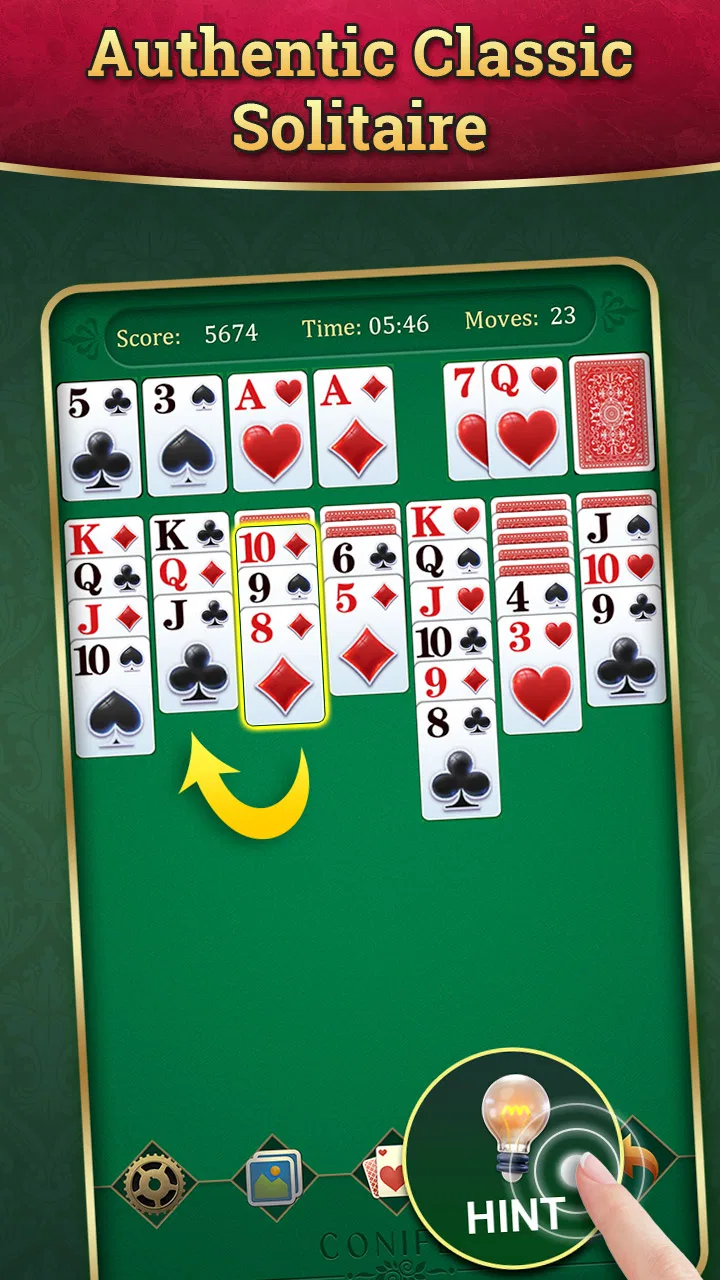
I use this section to look beyond the familiar rules and consider how the board itself guides a session. Recognizing the tableau quickly matters most when I am interrupted or playing on a small screen, so I’ll focus on the practical cues and points of friction that shape everyday navigation. That leads into how those same qualities hold up across different routines.
You May Also Like

 Blood Strike: 2.5 Anniversary
Blood Strike’s Loadouts Turn Every Drop Into a Tactical Gamble
A close look at Blood Strike’s custom loadouts: how fast access to signature weapons reshapes its battle royale rhythm, rewards preparation, and narrows the gap between fights.

 Pandora - Music & Podcasts
Pandora’s Music Is Easy to Start, but Harder to Recover
Pandora’s strength is its low-effort path from a seed to a station. Its weak spot is how much confidence it asks you to place in connection, setup, and quiet recovery.

 8 Ball Pool
 Is Built on Rivalries, Rematches, and Routine
A close look at the rivalries, rematches, shared routines, and unanswered safety questions that turn a quick pool match into a persistent mobile community.

 Samsung Music
’s Quiet Strength Is Playing What You Already Own
Its reach comes less from spectacle than from dependable access to a personal library. That simplicity is both the app’s strongest retention engine and its ceiling.

 AccuWeather: Weather Radar
AccuWeather Review: A Quick, Clear Forecast for Everyday Decisions
For everyday plans, the best forecast is the one you can understand quickly. AccuWeather makes rain timing, radar, and local conditions easy to act on, with a few trade-offs.

 Hill Climb Racing
Why Hill Climb Racing Still Turns Crashes Into One More Run
A tiny car, a bumpy hill and one more upgrade: Hill Climb Racing keeps resurfacing because its simple chaos makes every near-miss feel personal.
More From Our News Desk



A familiar layout lowers the learning curve
The strongest accessibility advantage is the card game's familiarity. Klondike has a visual language many players already understand: a row of foundation piles, a tableau of columns, a stock, and a waste pile. Because the rules are recognizable, I did not need a long tutorial to understand what the screen was asking me to do. New players can also learn through the natural sequence of looking for exposed cards, uncovering hidden ones, and building alternating-color runs.
That familiarity matters for people who become tired or overwhelmed by complicated menus. There is less conceptual work than in a collectible card game, a deck-building game, or a strategy title with several currencies and screens. I can open a round and focus on one decision at a time. For someone who wants a low-pressure mental exercise, that directness is a real strength.
Navigation is also helped by the fact that the central task remains visible on the play area. I am not constantly switching between a map, inventory, quests, and a shop to understand what to do next. The board itself is the activity. That makes the game easier to approach in short sessions, especially when I have only one hand free or only a little attention available.
Readability depends on the physical screen
The same visual simplicity can become a weakness on a small phone. Card ranks and suits need to be read quickly, and the tableau can become visually dense once several columns contain overlapping cards. I found that a larger display is more comfortable because it gives each card more breathing room. On a compact device, I would expect more squinting and more careful checking before making a move.
This is particularly relevant for players with reduced vision, color-vision differences, or difficulty distinguishing similar symbols. Klondike relies on both rank and suit, while the alternating red-and-black rule adds another visual layer. A player may know the rules perfectly and still lose time confirming whether a card is a heart or diamond, or whether a dark card is black rather than red. The game remains playable, but the experience can become slower and more tiring.
I recommend using the brightest comfortable screen setting and avoiding glare when playing for more than a few minutes. That is not a game feature, but it makes a noticeable difference with card-heavy layouts. I also prefer holding the phone in the position that gives the tableau the clearest view rather than the position that feels most natural for other apps. The practical lesson is that device size and lighting influence the experience almost as much as the rules do.
Simple rules, but not always simple decisions
The game is easy to start but not always easy to play well. A legal move can still be a poor move, and the order in which I expose hidden cards often determines whether the round stays promising. I get more from it when I pause before moving an available card immediately. Sometimes preserving an empty column or delaying a foundation move creates better access to the tableau.
That creates a useful middle ground for different ability levels. A casual player can make obvious moves and enjoy the familiar process, while a more experienced player can think about sequencing and risk. The challenge does not come from fast reactions. It comes from visual scanning, memory, and planning. For people who prefer thoughtful play over timed action, that is a comfortable design choice.
Motor demands are modest, but precision still matters
Solitaire does not demand rapid tapping, complex button combinations, or continuous movement. I can play at my own pace, which is helpful for anyone who finds fast games physically uncomfortable. The basic interaction is limited to selecting and moving cards, so the motor workload is far lighter than in an action game or a rhythm title.
However, relaxed pacing does not remove every motor barrier. Moving a card requires accurate contact with a particular area, and overlapping columns can make it easy to touch the wrong card. Players with tremors, limited reach, or difficulty making precise taps may need several attempts, especially when the screen is crowded. A larger phone or tablet can help by giving the fingers more room, though it may also be harder to hold for long periods.
I would treat the game as more suitable for deliberate touch than for highly precise control. If a player has difficulty dragging, a tap-based alternative would be valuable, but I would not assume that every interaction method is available or equally comfortable here. The safest expectation is that the player should be able to make controlled taps or short gestures without needing speed.
There is also a practical one-handed issue. When I hold a phone in one hand, the far side of the tableau can be awkward to reach, particularly if I am standing or holding something else. A two-handed position makes card movement easier, but it is less convenient on public transport or while waiting in a queue. This is a small friction point, yet it affects whether the game really works in the situations where people commonly use mobile Solitaire.
Sound is not central to the experience
The game is primarily visual and rule-based, so I can understand the board without depending on a story, dialogue, or spoken instructions. That makes it easier to use in a quiet environment and less intrusive in places where sound would be inappropriate. It also means that players who prefer silent games are not missing the main substance of the experience.
For players with limited vision, the visual emphasis creates the opposite concern: the cards carry nearly all of the information. A player who cannot comfortably distinguish the tableau may not receive enough support from the game itself. I would not choose this version as a first option for someone who needs a strongly audio-led card interface. The game is best suited to people who can access its visual symbols with reasonable comfort.
Playing across different situations and routines
A card puzzle can suit a quiet break, but the setting changes what feels convenient: a brief wait, a crowded commute, and an unhurried evening each call for a different level of attention. I’ll weigh where this game’s stop-and-resume rhythm is useful, and where screen comfort or purchase prompts may make another option a better fit.
A good fit for short, interrupted sessions
One of the most useful qualities is how naturally a round fits around everyday interruptions. I can begin while waiting for an appointment, play a few moves, put the phone down, and return later without needing to remember a complicated storyline. The mental state is easy to recover because the tableau shows the current problem. That makes it more practical than games that punish a break in concentration with a lost team, a missed event, or a long chain of dialogue.
A realistic example is a short lunch break. I might have enough time for a few careful moves but not enough time to commit to a full online match. Solitaire gives me an activity with a clear focus and no need to coordinate with another person. If work calls me back, I can stop immediately. This is where the game's traditional design feels especially well matched to phones.
It can also work for people who want a gentle routine before bed, although the bright screen may not be ideal late at night. The game does not require social performance or a high level of emotional investment. For some players, that predictable structure can be calming. For others, repeated failed rounds may become frustrating rather than relaxing, so the mood benefit depends on personal tolerance for trial and error.
Useful offline-style expectations need caution
Many people choose a card game expecting it to work anywhere, including travel or places with unreliable reception. I would not make a firm promise about every offline behavior without checking the current build and device conditions. What I can say is that the core appeal is self-contained: the player is solving a card layout rather than waiting for opponents or participating in a live event. That makes it conceptually better suited to disconnected moments than a multiplayer card game, but practical availability can still depend on how the app behaves after installation.
For travel, I would open it before leaving and make sure the game starts normally on the device. That small check avoids discovering a problem when there is no connection or no opportunity to troubleshoot. It is a sensible habit for any mobile game intended for waiting rooms, flights, or commutes.
Free access is inviting, while purchases deserve attention
The game is free to download and is rated for Everyone, which makes it easy to recommend as a low-commitment experiment for a household. A parent can introduce the basic rules to a child, and an older relative who already knows Klondike can start without learning a new card system. Still, the age rating should not be confused with universal ease of use. A child may understand the rules but struggle with small cards, while an older player may appreciate the slow pace but need a larger screen.
In-app purchases range from $1.99 to $19.99 per item. I would keep that in mind before handing the phone to someone who may tap quickly through prompts or before treating the game as completely cost-free in long-term use. The free entry is a positive, but I would review purchase controls on the device if children use it. That is especially important because a simple game can encourage repeated play, and repeated play increases the chance of an accidental purchase.
The presence of purchases also changes how I judge the experience. I am more forgiving of a basic visual style when the game is genuinely unobtrusive, but I am less patient if interruptions make the central card puzzle harder to reach. Anyone who wants a completely uninterrupted session should compare this version with a paid Solitaire alternative or a system card game that does not use the same purchase model.
Who will enjoy it, and who should look elsewhere
I think it is a strong match for traditional card players, beginners who want to learn Klondike, and people who prefer solo games with no social pressure. It is also suitable for users who want a light mental activity that can be paused without consequences. The current version is 18.2.8, and the listed minimum is Android 6.0, so it is aimed at a wide range of Android devices rather than only recent phones.
I would be more cautious recommending it to someone who wants extensive customization, strong support for nonvisual play, or a rich sense of progression. It is not the right choice for a player who needs competitive matchmaking, a story, or frequent strategic variety. Even within card games, a deck-building title offers more long-term experimentation, while a multiplayer card app provides social interaction that this solo format does not.
It may also be a poor fit for people who dislike repeated layouts and incremental decision-making. The pleasure comes from the familiar cycle, not from constant surprise. If you need every session to introduce new mechanics, characters, or challenges, the traditional Klondike structure may feel narrow after the initial appeal fades.
Small habits that make the board easier to manage
I get better results when I scan the tableau in a fixed order instead of tapping whatever card catches my eye. I start by checking exposed cards that can uncover a face-down card, then look for moves that create or preserve an empty column, and only afterward consider sending cards to the foundations. This reduces impulsive moves and makes the board easier to read, especially when several legal options appear at once.
Another useful habit is to treat foundation moves as a timing decision rather than an automatic reward. Moving a low card upward can feel productive, but that card may still be useful in the tableau for building a sequence. I prefer to ask whether the move opens access to a hidden card or removes a restriction. This is a small strategic distinction, yet it makes the game feel more thoughtful and helps beginners understand why a legal move is not always the best move.
For players with visual or motor difficulties, I would simplify the physical setup before blaming the game. Use a stable surface, keep the phone close enough to avoid stretching, and take short breaks when the cards begin to blur together. Playing in landscape or portrait may feel different depending on the device, so trying both orientations is worthwhile. The best position is the one that leaves the tableau visible without forcing repeated hand repositioning.
What the game does well for inclusion
Its inclusive strength comes from restraint. There is no need to react quickly, communicate with strangers, or understand a large collection of symbols and systems. The rules can be explained verbally, and a friend or family member can help a new player identify legal moves while the player remains in control. That makes it approachable in shared settings, including casual play with someone who is unfamiliar with mobile games.
The game also avoids a common problem in more demanding titles: progress is not tied to keeping up with other players. Someone can take longer to read the board or pause between moves without affecting a team. That flexibility is valuable for users whose attention, energy, or hand control varies from day to day.
Still, restraint is not the same as comprehensive support. The experience remains centered on visually distinguishing cards and accurately selecting them. Players who need large text, strong contrast controls, spoken descriptions, or alternative input should test the game personally rather than assuming that a simple ruleset guarantees an easy interface. The core design is welcoming in pace, but not automatically accessible in every sensory or motor context.
My inclusive verdict
After using it as a quiet, traditional card game, I see Solitaire as a dependable choice for people who want familiar Klondike play in a free Android package. Conifer limited has kept the central activity clear enough for quick sessions, and the slow pace makes it more accommodating than many games that depend on speed or competition. The Everyone rating and broad device support add to its practical reach, while the large existing audience suggests that the format is easy for many players to recognize.
My recommendation comes with a clear condition: make sure the card size and visual contrast work for you. If they do, the game is pleasant for waiting, unwinding, and practicing careful sequencing. If they do not, the lack of a more visibly adaptable interface may outweigh the simplicity of the rules. I would also consider the purchase model before letting a child use it freely and compare it with a paid or more accessibility-focused alternative if uninterrupted or nonvisual play is essential.
Overall, Solitaire succeeds because it does not ask for much beyond attention and a few deliberate touches. It is not a broad card-game platform, and it will not satisfy players seeking social competition or constant novelty. But for a person who wants a familiar solo puzzle that fits into small gaps in the day, it remains an easy game to understand and a reasonable one to keep installed. Its best feature is the freedom to play slowly, stop at any moment, and return to a board that still makes sense.
FAQs for Solitaire
01What are the key features of the Solitaire app?
The Solitaire app offers various game modes, including Classic Solitaire, Spider, and FreeCell. It features daily challenges, customizable card decks, and backgrounds to enhance gameplay. Additionally, it provides hints and undo options to assist beginners and seasoned players alike. The app also tracks your statistics, allowing you to monitor your progress over time.
02Is the Solitaire app free to download and play?
Yes, the Solitaire app is generally free to download and play. However, it may contain ads and optional in-app purchases. These purchases often include ad removal, additional customization options, or unlocking premium features. Always check the app store listing for specific details about pricing and in-app purchases.
03Does the Solitaire app require an internet connection to play?
The Solitaire app can be played offline, providing a seamless gaming experience without the need for an internet connection. However, certain features like daily challenges or updates might require connectivity. Playing offline ensures you can enjoy the game anytime, anywhere, without worrying about data usage.
04How user-friendly is the Solitaire app for beginners?
The Solitaire app is designed with user-friendliness in mind, making it an excellent choice for beginners. It includes a tutorial mode that explains the rules and gameplay mechanics. Additionally, the app offers hints and undo options, allowing new players to learn and improve their skills without frustration.
05What devices are compatible with the Solitaire app?
The Solitaire app is compatible with both Android and iOS devices. It supports a wide range of smartphones and tablets, ensuring a smooth gaming experience across different screen sizes. Always check the app store for specific device requirements or updates to ensure compatibility with your device.
Pros
- Simple and intuitive interface.
- Quick daily challenges available.
- Offline play supported.
- Minimal battery consumption.
- Customizable card decks.
Cons
- Includes frequent ads.
- Limited hints available.
- No multiplayer option.
- Basic graphics design.
- No landscape mode.

Solitaire
Gallery